
Introduction: Why This Stage Decides the Future
Many farmers give good care to calves in the milk-feeding stage (0–3 months) but unknowingly neglect the 4–8 month period.
This is a big mistake.
4–8 months is the “foundation stage”
If growth is poor here, the calf may:
- Look small and weak
- Reach puberty late
- Give less milk in future
- Have shorter productive life
A calf that grows well between 4–8 months becomes a strong heifer and a high-yielding dairy cow.
What Actually Happens in a Calf Between 4–8 Months?
1️⃣ Milk Stops – Real Growth Starts
- Milk feeding is stopped or reduced
- Growth now depends on:
- Solid feed (concentrate + fodder)
- Digestion power of the rumen
- Proper minerals and vitamins
From now on, the stomach (rumen) decides growth, not milk.
2️⃣ Rumen (Stomach) Development
Between 4–8 months:
- Rumen size increases fast
- Good bacteria develop inside the stomach
- Calf learns to digest:
- Dry fodder
- Silage
- Chaff
- Concentrate
If digestion is weak:
❌ Feed intake reduces
❌ Growth slows down
❌ Calf looks thin despite feeding
3️⃣ Frame Growth Happens Now
This stage decides:
- Height of the animal
- Chest width
- Body length
- Overall body capacity
⚠️ Important truth:
Height and frame lost at this age cannot be fully corrected later, even with expensive feeding.
4️⃣ Immunity Is Still Developing
During 4–8 months calves face:
- Vaccination
- Deworming
- Weather changes
- Heat stress
- Grouping stress
If immunity is weak:
- Calf falls sick frequently
- Growth stops after every illness
- Recovery is slow
Common Problems Seen in 4–8 Month Calves
Many farmers notice:
- Calf eats but does not grow well
- Narrow chest and weak legs
- Slow weight gain
- Growth stops after fever or diarrhea
- Calf looks dull compared to others
These are usually due to:
- Energy shortage
- Poor digestion
- Mineral and vitamin deficiency
- Stress and immunity weakness
What Does a Calf Need for Proper Growth at 4–8 Months?
✅ 1️⃣ Extra Energy (Without Making Calf Fat)
- Growth needs energy
- Too little energy → slow growth
- Too much fat → fatty calf (bad for future milk)
Balanced energy is required
✅ 2️⃣ Protein for Body Building
- Helps form muscles and tissues
- Works best when digestion is good
✅ 3️⃣ Minerals for Frame & Bone
Especially important:
- Calcium & Phosphorus – bones and height
- Zinc & Manganese – frame and joints
- Copper & Selenium – immunity and growth strength
✅ 4️⃣ Vitamins for Health & Growth Continuity
- Vitamin A – growth and resistance
- Vitamin D – bone strength
- Vitamin E – stress and immunity
✅ 5️⃣ Digestive Support
- Without good digestion, even good feed is wasted
- Rumen bacteria need support for proper work
Why Normal Feeding Is Often Not Enough
Even when farmers give:
- Good concentrate
- Enough fodder
- Clean water
Still, growth may not be ideal because:
- Feed alone cannot cover all mineral and vitamin needs
- Stress reduces feed efficiency
- Digestion may not be fully efficient
This is why growth promoter supplementation is important in this stage.
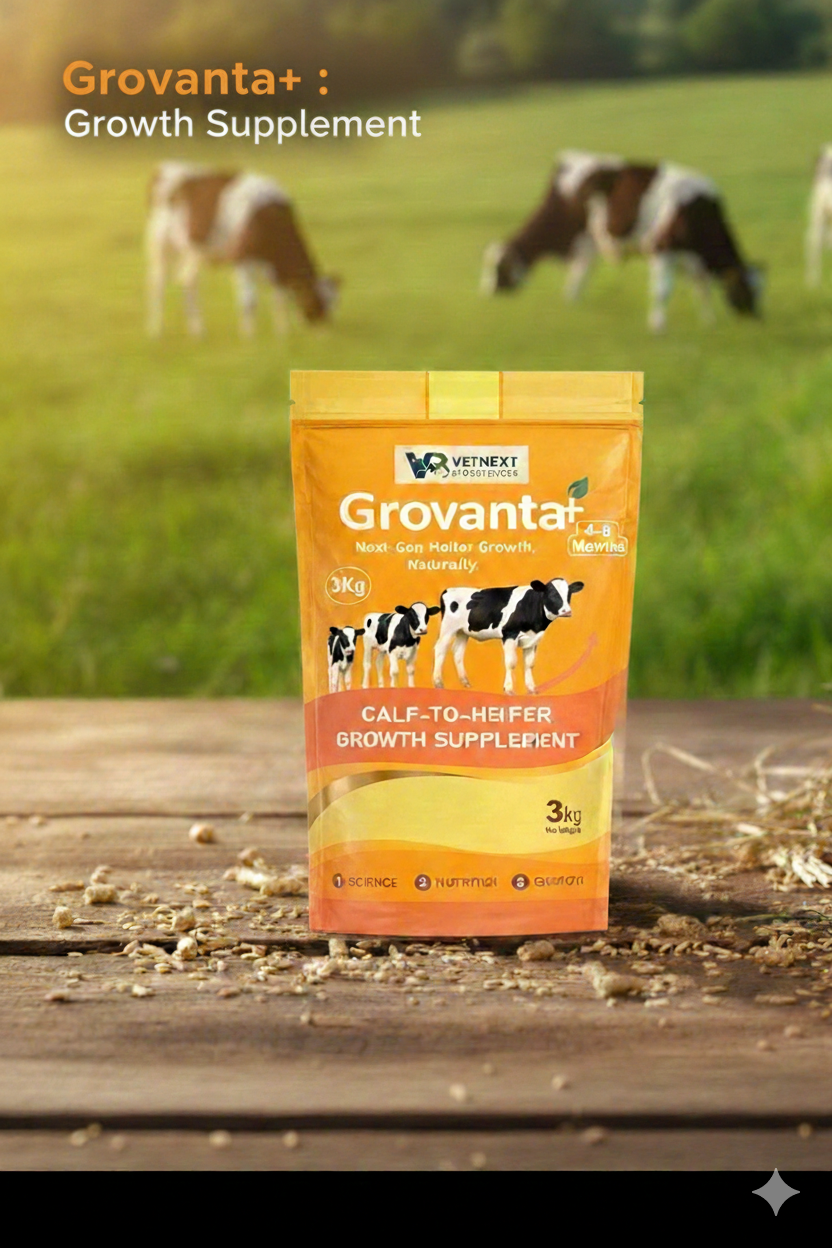
Role of GroVanta Plus™ Powder in 4–8 Month Growth
GroVanta Plus™ Powder is designed specially for this age group to support:
- Frame growth (height, width, capacity)
- Better digestion and feed utilization
- Immunity and stress tolerance
- Future milk-producing potential
It works as a support system, not as a feed replacement.
How to Use GroVanta Plus™ Effectively
Daily Dose
- 4–6 months: 20–30 g per calf
- 6–8 months: 30–40 g per calf
Method
- Mix with concentrate, calf feed, or TMR
- Sprinkle a little jaggery-water if needed
Duration
- Minimum 2–3 months continuously
What Results Can Farmers Expect?
- ✔ Better appetite
- ✔ Visible improvement in height and frame
- ✔ Stronger, healthier-looking calves
- ✔ Fewer growth breaks during illness or stress
- ✔ Better heifer development for future milk
Simple Message for Farmers
“Strong growth between 4–8 months decides how much milk the cow will give for years.”